
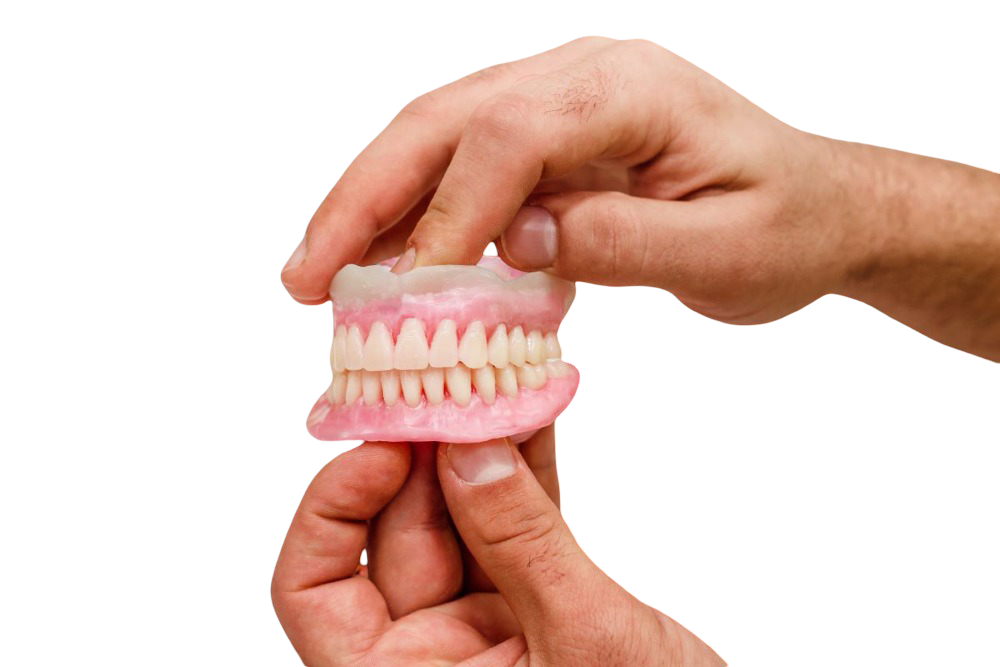
Dentures are removable sets of false teeth. They restore chewing and speech, and they support the cheeks and lips so the face does not collapse inward. They suit people missing several teeth or a whole arch, and they can be fitted after extractions once the gums have healed.
What a Denture Appointment Involves
- An assessment first, because suitability is decided case by case
- Full or partial replacement, depending on how many teeth are missing
- Traditional lab-made construction, fitted and adjusted to you
- A choice of materials, which changes both comfort and lifespan
- Follow-up visits for the adjustments almost everyone needs
- Costs explained before treatment begins
Who Are Dentures For?
Dentures are recommended for people missing multiple teeth or all of their teeth. That includes teeth lost slowly over years and teeth lost after extractions.
What they give back:
- Chewing, so you are not limited to soft food
- Speech, which suffers more from missing back teeth than people expect
- Facial support, keeping the cheeks and lips from sinking in
Patients looking for dentures near you should expect an examination first. Whether they are the right answer is decided there, not over the phone.
What Types of Dentures Are There?
Several options are available here, and they are not interchangeable.
| Type | When it is used | How it stays in |
|---|---|---|
| Full set | A whole upper or lower row is missing | A close fit against the gums |
| Partial | Some natural teeth remain | Clips onto the teeth you still have |
| Flexible partials | Some teeth remain, comfort is a priority | A flexible base that moves with the gum |
| Implant-supported or snap-on | More stability is wanted | Clips onto dental implants |
The right type is chosen on comfort, stability, and what your mouth can actually support. A partial that clips onto weak teeth is a short-term answer, so the remaining teeth are assessed as carefully as the gap.
Dentures, a Bridge, or Implants?
These are the three ways to replace missing teeth, and the honest differences matter.
Dentures come out. They work when many teeth are gone or the bone will not support implants.
A bridge is fixed, but it needs healthy teeth either side to hold on to.
Implants are fixed and permanent, and they hold the jawbone better than anything else. They cost the most and need enough bone to place.
The decision is made on cost, comfort, bone health, and how you want to live. All three are explained before you choose, including what each one will be like in ten years.
What Are Dentures Made Of?
The material decides how long a set lasts, and it is rarely explained properly.
- Acrylic is lighter and less costly. It can crack, particularly if you clench or grind heavily.
- Metal frames are far stronger. A well-made metal partial can last for many years.
There is no honest average lifespan, because it depends on your bone, your general health, your bite, and whether you are a clencher. Anyone quoting a fixed number of years is guessing. What is true is that gums and bone change shape over time, so even a well-made set will need relining or adjusting eventually.
What Is It Like Living With Dentures?
There is an adjustment period, and pretending otherwise helps nobody. The first weeks feel strange while the muscles of your cheeks and tongue learn a new shape.
- Eating starts with soft food cut small, then widens as confidence returns
- Speaking takes practice, and reading aloud at home speeds it up a lot
- Adhesives are discussed where they genuinely help, rather than sold as standard
- Daily cleaning matters as much as brushing did, and gums still need care
- Follow-up adjustments are normal, not a sign something went wrong
Sore spots in the first weeks are expected. Come in and have them adjusted rather than putting up with them, because a plate that rubs will keep rubbing.

How Much on Average Is a Full Set of Dentures?
There is no average figure for dentures, and quoting one would be misleading. The cost depends on:
- Full or partial, and how many teeth are being replaced
- Acrylic or a metal frame
- Whether implants are involved, which changes the cost a lot
- Any extractions or healing time needed first
Costs and coverage are explained to you before anything begins.
On the Canadian Dental Care Plan, complete dentures are covered, and the fee includes three months of aftercare. Partial plates are covered but must be approved before treatment starts. Implant-supported ones are not covered at all, which is worth knowing before you set your heart on them.
Frequently Asked Questions
Book a Denture Consultation in Nobleton
If you are missing several teeth, or your dentures no longer fit the way they did, an examination is the place to start. You leave knowing which type suits your mouth, what it will cost, and what your plan actually covers.
- Full, partial, flexible, and implant-supported options all assessed
- Costs and coverage explained before you commit
Patients from Nobleton, King City, Bolton, and Schomberg are welcome.
Nobleton Dental Smiles is a dentist in Nobleton, ON, at 12931 Ontario Hwy 27 #3, Nobleton, ON L0G 1N0.