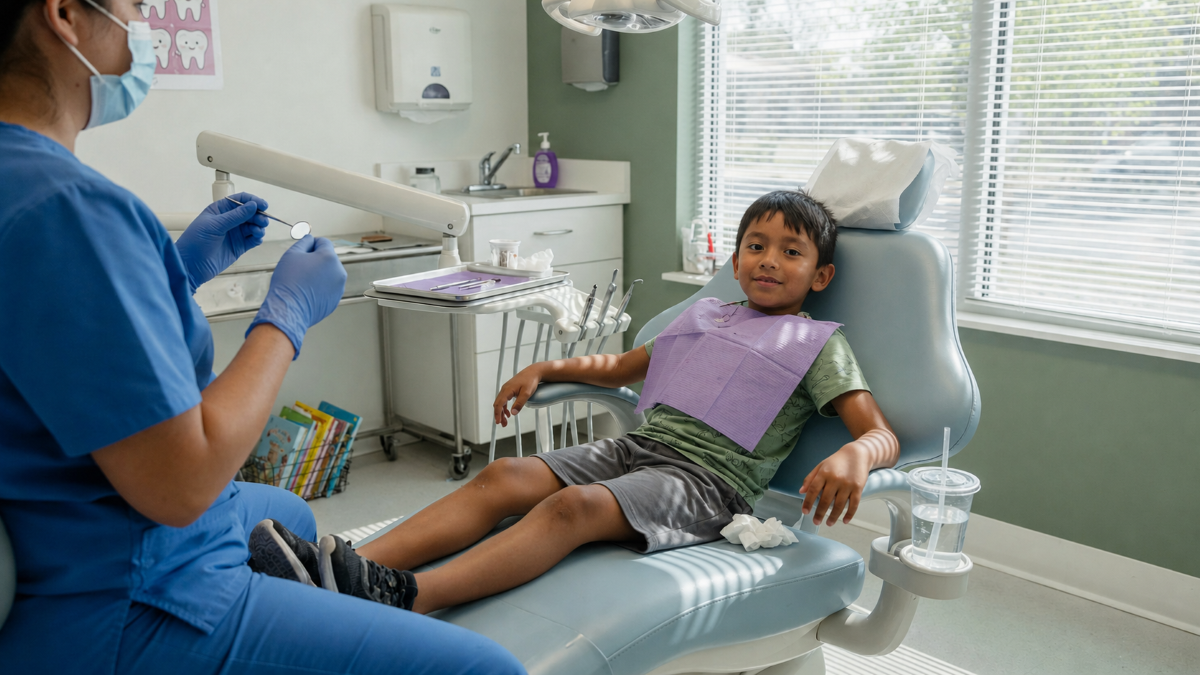
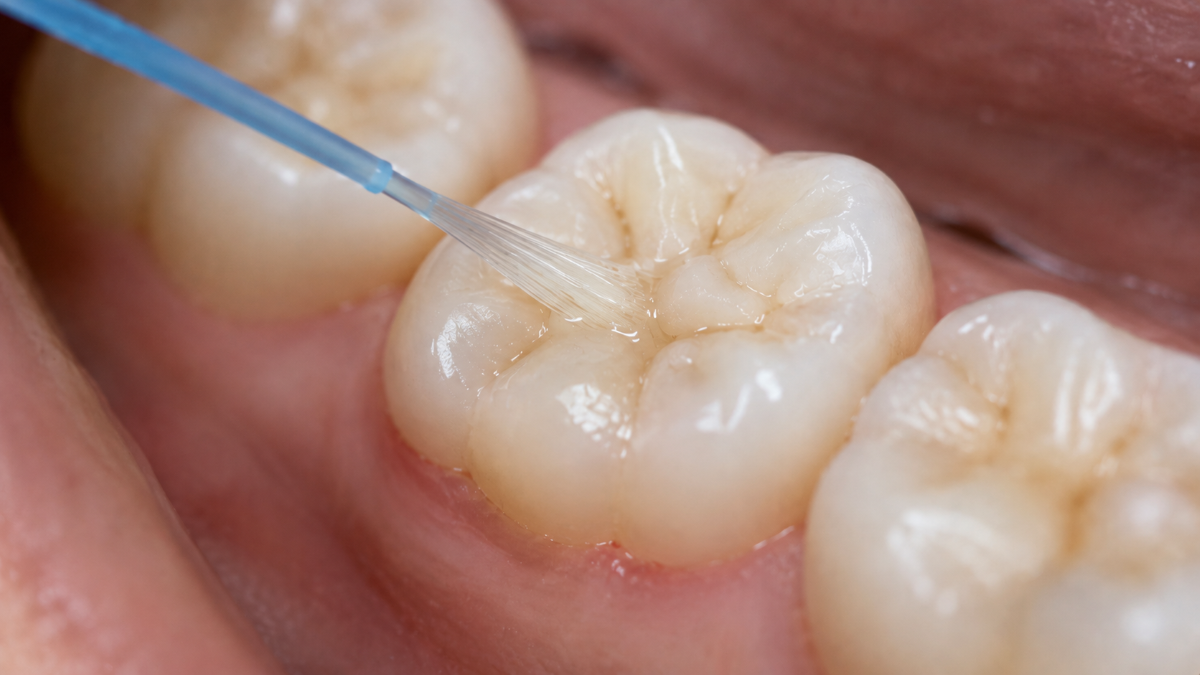
A dental sealant is a thin protective coating painted onto the chewing surface of a back tooth. It fills the deep grooves where a toothbrush cannot reach, so food and bacteria cannot settle there. It takes minutes, needs no drilling and no freezing, and it is one of the simplest ways to stop decay before it starts.
What Dental Sealants Do
- Cover the grooves and pits on the chewing surfaces
- Keep bacteria and plaque out of the places a brush misses
- Lower the risk of decay in hard-to-clean areas
- Act as a barrier over the enamel
- No drilling and no numbing needed
- Applied at a routine visit, with no drilling and no numbing
Who Should Have Dental Sealants?
Sealants are most associated with children, but they are not only for children.
- Children and teenagers whose back teeth have just come through
- Adults with deep grooves or a high risk of decay
- Anyone with a history of tooth decay
- Anyone who simply wants the extra protection
Whether they suit you is decided at an examination rather than applied to everyone by default.
How Are Dental Sealants Applied?
- The tooth is cleaned and prepared.
- The sealant is painted on to the chewing surface.
- That is it. No drilling, no anaesthetic.
- It is done during a routine visit, not a separate appointment.
Nothing is drilled and no numbing is needed.
Nothing is removed from the tooth either. A sealant adds a layer rather than taking one away, which is not true of most dental treatment.
Which Teeth Can Be Sealed?
Not every tooth is suitable, and this is worth knowing before you ask for them.
| Suitable | Not suitable |
|---|---|
| Molars with deep grooves and pits | Teeth with active decay |
| Teeth free of decay | Teeth that already have fillings |
| Newly arrived back teeth | Smooth surfaces with no grooves |
The reasoning is simple. A sealant is a barrier, so sealing over existing decay would trap the problem underneath rather than stop it. Suitability is judged at your examination, on the condition of the enamel and how well the tooth is being kept clean.
Do Dental Sealants Need Replacing?
Dental sealants last several years with proper care, though the exact life depends on your bite and your habits.
They are not a fit-and-forget treatment:
- Checked at every routine examination
- Reapplied if wear or damage shows
- Longevity depends on oral habits and how hard you bite
That checking is part of ongoing preventive care rather than an extra visit. It happens at appointments you were already attending.
How Much Do Dental Sealants Cost?
Sealants are often covered for children under preventive insurance benefits, which is one of the reasons they are worth asking about.
Coverage is reviewed against your age and your plan details, and you are told what applies before anything is placed.
The value argument is straightforward. A sealant costs a fraction of the filling that the same tooth may otherwise need, and it prevents rather than repairs.
That comparison is worth making out loud. A filling on a six-year molar starts a cycle: fillings are replaced over a lifetime, and each replacement takes a little more tooth.
Frequently Asked Questions
Book Dental Sealants in Nobleton
If your child’s adult back teeth have just come through, this is the window. People searching for dental sealants near you are usually parents who would rather prevent a filling than pay for one.
- Applied at a routine visit, with no drilling and no freezing
- Often covered for children under preventive insurance benefits
Patients from Nobleton, King City, Bolton, and Schomberg are welcome.
Nobleton Dental Smiles is a dentist in Nobleton, ON, at 12931 Ontario Hwy 27 #3, Nobleton, ON L0G 1N0.