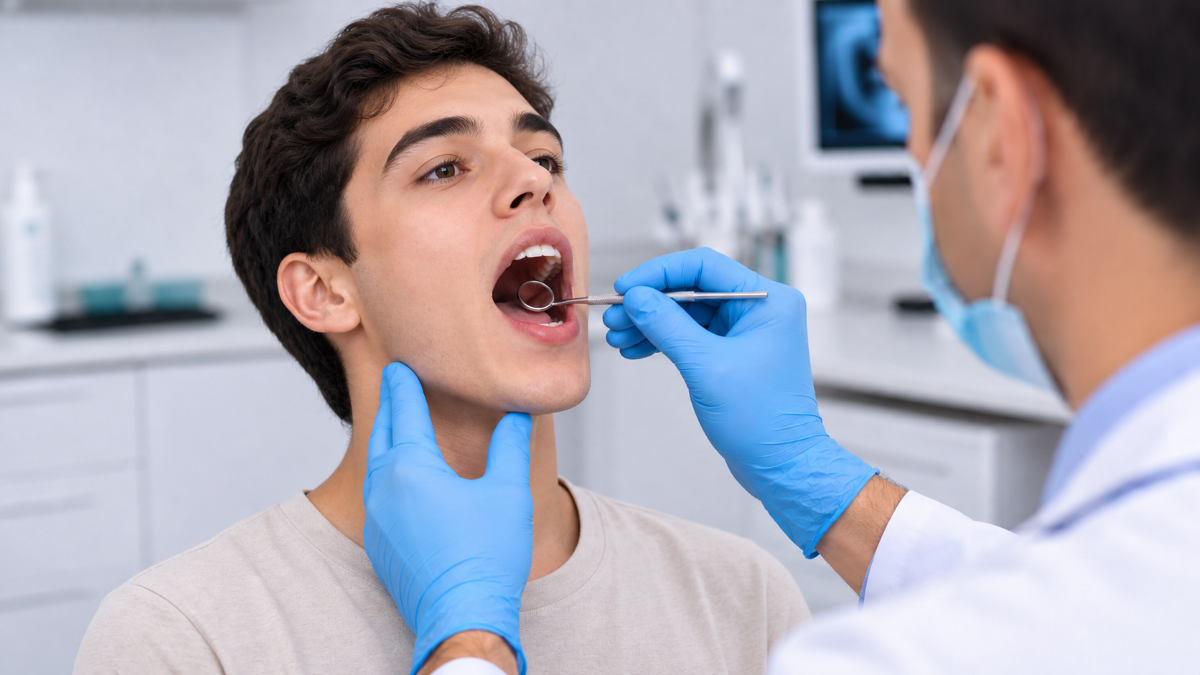
An oral cancer screening is a short examination of the mouth, tongue, throat, and neck to identify unusual tissue at an early stage. It involves looking, and gently feeling the tissues with the fingers, and it is usually done as part of a routine dental visit. Its purpose is early detection, not diagnosis.
What an Oral Cancer Screening Covers
- A visual examination of the mouth, tongue, and throat
- Gentle feeling of the mouth tissues and neck, checking for lumps or thickening
- A review of your history and any symptoms you have noticed
- Screening aids used where appropriate, selected according to what the examination requires
- Findings explained clearly to you, whatever they are
- Included in routine examinations, so it rarely needs a separate appointment
How Do I Get Screened for Oral Cancer?
An oral cancer screening is quick, painless, and requires no preparation. The dentist looks at the lips, cheeks, gums, and tongue. Then the roof and floor of the mouth, and the back of the throat. Finally they gently feel the tissues of the mouth and the sides of the neck.
The check looks for tissue that does not look or feel the way healthy tissue should. That means unusual colour, thickening, a sore that has not healed, or a new lump. Nothing is removed and nothing is injected.
If you are looking for an oral cancer screening near you in Nobleton, one thing is worth knowing. This check is part of a standard dental exam rather than something separate.
Who Should Have an Oral Cancer Screening, and What Raises the Risk?
Adults of all ages are screened as part of routine care. Screening does not depend on symptoms, which is the point: early changes are usually painless and easy to overlook.
Some factors are known to raise risk:
- Tobacco in any form, including cigarettes, cigars, pipes, and smokeless tobacco
- Alcohol, particularly heavy use, and especially combined with tobacco, where the effect is greater than either alone
- HPV infection, which accounts for a meaningful share of cases not linked to tobacco or alcohol
- Sun exposure, specifically for cancers of the lip
- Increasing age, though cases do occur in younger adults
- A previous oral cancer diagnosis
Risk factors raise the chance, they do not decide it. People with none of them still develop oral cancer, which is why screening is offered to adults generally.
What Signs of Oral Cancer Should You Watch For Between Visits?
Anything unusual that lasts more than two weeks deserves a professional look. The signs worth noting are:
- Sores or ulcers that do not heal
- Lumps, thickened tissue, or swelling anywhere in the mouth or neck
- Red or white patches on the tissues of the mouth
- A sore throat or hoarseness that does not resolve
- Difficulty swallowing, chewing, or moving the jaw or tongue
- Numbness or unexplained bleeding in the mouth
Most of these turn out to be something else. Mouth ulcers, irritation from a sharp filling, and infections are all far more common than cancer. The reason to have them checked is that you cannot tell the difference by looking.
How Often Should You Have an Oral Cancer Screening?
An oral cancer screening is usually recommended every 12 months for adults as part of routine care. Because dental exams are generally recommended every 6 to 9 months, most patients are screened at least annually without arranging anything extra.
According to the Canadian Dental Association, regular dental visits are the main opportunity most adults have for their mouth to be examined by a clinician.
What Is the Difference Between an Oral Cancer Screening and a Diagnosis?
An oral cancer screening cannot tell you whether you have cancer, only whether something needs a closer look:
| Screening | Diagnosis | |
|---|---|---|
| Purpose | Spot tissue that looks or feels unusual | Find out what that tissue actually is |
| What happens | Looking and gently feeling | Biopsy, where a tissue sample is examined in a laboratory |
| Where | At a routine dental visit | Usually following referral to a specialist |
| What it tells you | Whether something needs a closer look | A definitive answer |
| Outcome | Reassurance, monitoring, or referral | A diagnosis, which guides treatment |
A finding is therefore not bad news in itself. It is a decision to look more carefully.
What Happens If an Oral Cancer Screening Finds Something?
Findings are explained to you clearly and directly at the visit. You are told what was seen, where it is, and what the options are.
- Monitoring may be appropriate where a change is minor and likely to resolve
- Referral is arranged when appropriate, to the clinician best placed to investigate further
- Next steps are explained so you know what happens and when
- Nothing proceeds without your consent
Is an Oral Cancer Screening Covered?
An oral cancer screening is often included as part of a routine examination. Where a specific oral cancer screening cost does apply, it is explained to you before treatment begins. Final pricing varies based on your individual clinical needs.
Insurance coverage is reviewed where it applies, and CDCP patients are accepted, with full examinations among the covered services subject to approval.
Frequently Asked Questions
Book an Oral Cancer Screening in Nobleton
The strongest argument for an oral cancer screening is how little it asks of you. A few minutes within a routine visit, no preparation, no discomfort, and a clinician looking carefully at tissue you cannot examine yourself.
- Included in routine examinations, covering the mouth, tongue, throat, and neck, with findings explained clearly
- Referral arranged where anything needs a closer look
If you have noticed a sore, patch, or lump that has lasted more than two weeks, book sooner rather than waiting for your next recall. Patients from Nobleton, King City, Bolton, and Schomberg are welcome.
Nobleton Dental Smiles is a dentist in Nobleton, ON, at 12931 Ontario Hwy 27 #3, Nobleton, ON L0G 1N0.