

Tooth sensitivity is that sharp jolt from something cold, hot, or sweet. It usually means the layer under the enamel is exposed, or that something is wrong inside the tooth. Treatment starts by finding out which, because the two need very different answers.
What Does Tooth Sensitivity Treatment Involve?
- Finding the cause first, since it is a symptom rather than a diagnosis
- In-office relief with fluoride varnish or gel
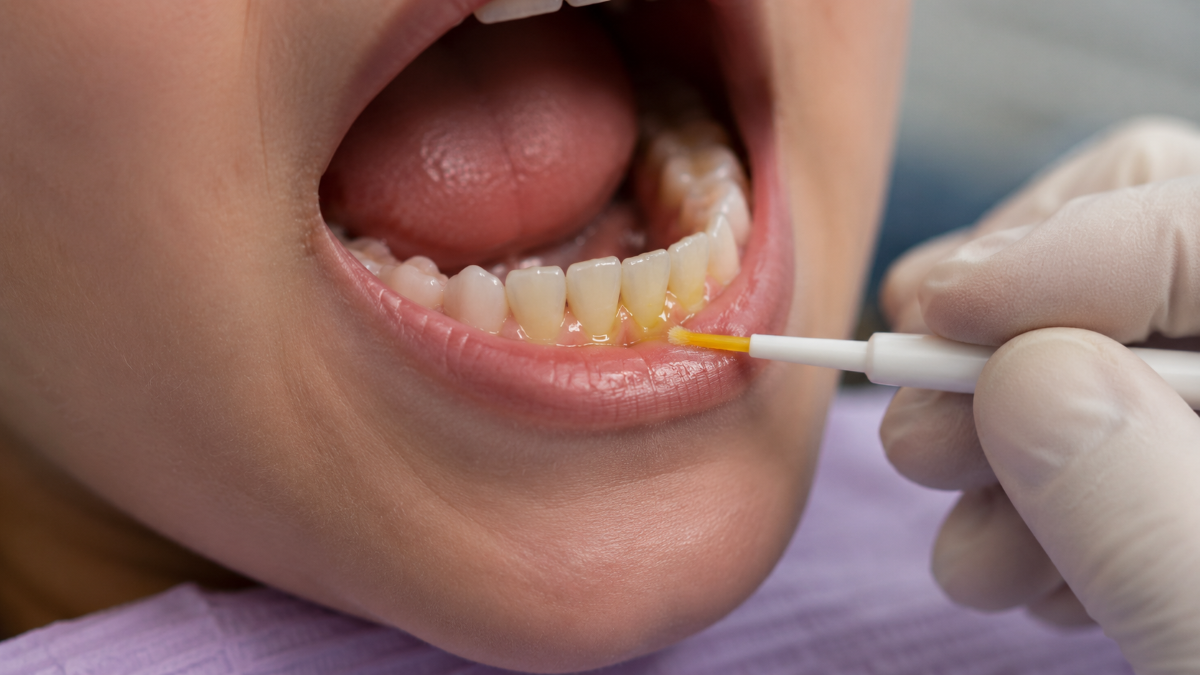
- Desensitising bonding agents or sealants on exposed roots
- Laser therapy to seal the tiny channels in the tooth surface
- Gum grafting recommended where the gums have shrunk back badly
- A home routine to keep it under control
What Causes Tooth Sensitivity?
Five things account for most cases, and they are not equally serious.
- Gums shrinking back, exposing the root, which has no enamel on it
- Enamel wear from brushing too hard or from acidic food and drink
- Grinding and clenching, which wears the surface down over time
- Sensitivity after treatment, such as after whitening or a deep clean
- A cavity or a cracked tooth that has not been found yet
The last one matters most. It is sometimes the only warning you get that something is wrong inside a tooth. That is why it should be looked at rather than lived with.
Tooth Sensitivity or Something Worse: How Do You Tell?
Sorting tooth sensitivity from something worse is what the assessment does. It is the reason not to just switch toothpaste and hope.
Four checks are used:
- Hot and cold testing, watching how long the response lasts
- Tapping and bite testing
- X-rays or a 3D scan, looking for infection or a deep crack
- Whether the pain lingers, or arrives on its own with no trigger
The pattern is what gives it away. Sensitivity that stops the moment the cold goes is usually surface sensitivity. Pain that lingers for many seconds, or comes on by itself, points to the nerve. That heads towards root canal treatment rather than a desensitising gel.
| Surface sensitivity | Nerve problem | |
|---|---|---|
| How it feels | Sharp, brief | Lingering, or throbbing |
| Trigger | Cold, hot, sweet | Often none needed |
| Settles when? | As soon as the trigger goes | Carries on afterwards |
| Usual answer | Desensitising treatment | Root canal treatment |
How Is Tooth Sensitivity Treated in the Practice?
- Professional fluoride varnish or gel, stronger than anything at home
- Bonding agents or sealants painted onto exposed root surfaces
- Laser therapy, sealing the microscopic channels that carry the sensation
- Gum grafting, recommended where recession is severe
Which of these you get depends on the cause. Covering exposed roots is a different job from strengthening worn enamel.
What Can You Do at Home for Tooth Sensitivity?
The in-office work gives relief. The home routine is what keeps it.
- Prescription-strength fluoride toothpaste, which is stronger than the shop version
- Over-the-counter desensitising toothpaste, where that is enough
- A night guard if grinding is the cause, because nothing else will hold while the grinding continues
- A soft brush and a gentler technique, which is taught rather than just suggested
That last point catches people out. Brushing harder is the instinct, and it is exactly what wears the enamel away and makes it worse.
Frequently Asked Questions
Book Tooth Sensitivity Treatment in Nobleton
If cold drinks make you flinch, that is worth ten minutes of someone’s attention. People searching for tooth sensitivity treatment near you often assume it is just something to put up with. Sometimes it is. Sometimes it is a cracked tooth.
- The cause identified first, with testing and imaging
- In-office treatment options, plus a home routine that holds
Patients from Nobleton, King City, Bolton, and Schomberg are welcome.
Nobleton Dental Smiles is a dentist in Nobleton, ON, at 12931 Ontario Hwy 27 #3, Nobleton, ON L0G 1N0.