
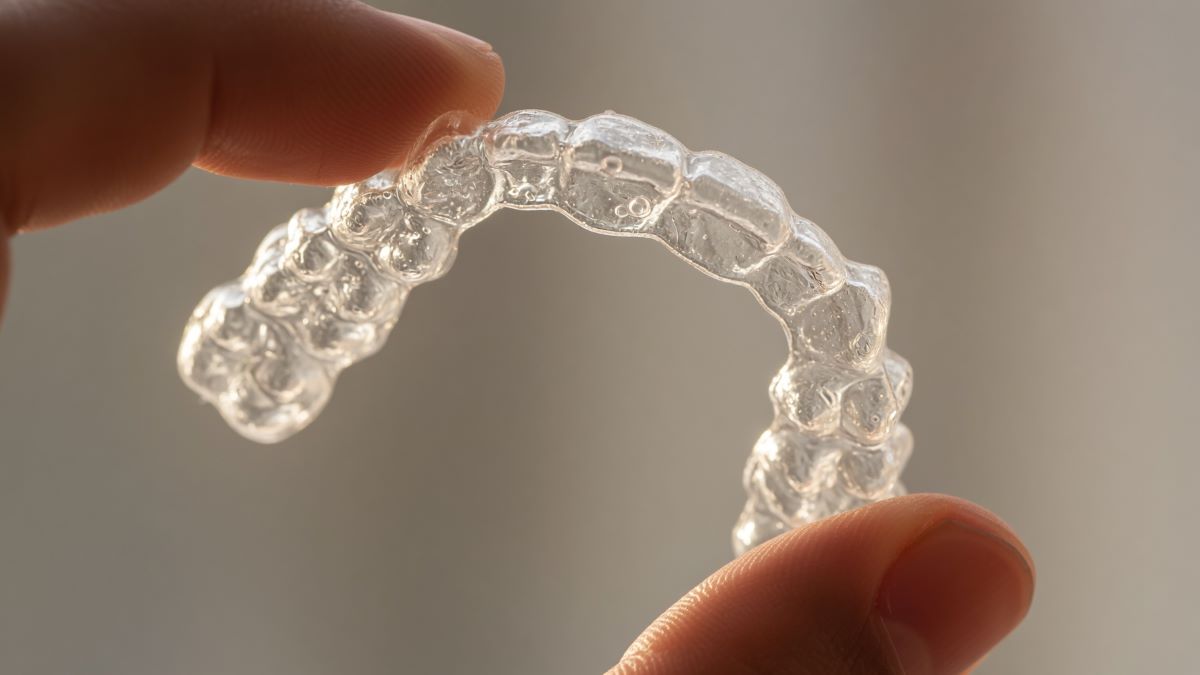
Invisalign straightens teeth using a series of clear, removable aligners instead of fixed braces, and is often called invisible braces. Each set is worn for a short period, then swapped for the next, moving the teeth a little at a time. It treats crowding, gaps, and bite problems, and most people will not notice you are wearing it.
What Invisalign Treatment Involves
- Clear aligners worn instead of metal brackets and wires
- Treated by an Invisalign-certified dentist, with regular in-person check-ups
- Aligners given to you in stages, each one moving the teeth a little further
- Refinements included if the plan needs adjusting along the way
- A retainer plan discussed once treatment finishes
- A personal estimate given after your assessment
What Does Invisalign Fix?
It handles most of the everyday alignment problems people want sorted:
- Crowded or overlapping teeth
- Gaps or spacing between teeth
- Bite alignment problems
- Teeth that have shifted back after braces years ago
People searching for Invisalign near you are usually in one of two groups. It suits adults who want something discreet and teens who would rather not have fixed braces. Whether it is right for your case is checked at the consultation, because very complex movements sometimes still need braces.
How Does Invisalign Work?
- Consultation and digital assessment. Your teeth are checked and a treatment plan is mapped out.
- Your aligners are made. A custom series is produced, each one slightly different from the last.
- You wear them in order. Each set moves the teeth a small amount before you move on to the next.
- Regular visits. Progress is checked in person, not just remotely.
- Retention. A plan to hold the teeth in place is discussed once you finish.
Aligners come out for eating and cleaning, which is the main practical difference from braces. That also means they only work while they are in, so wearing them as instructed matters more than anything else.
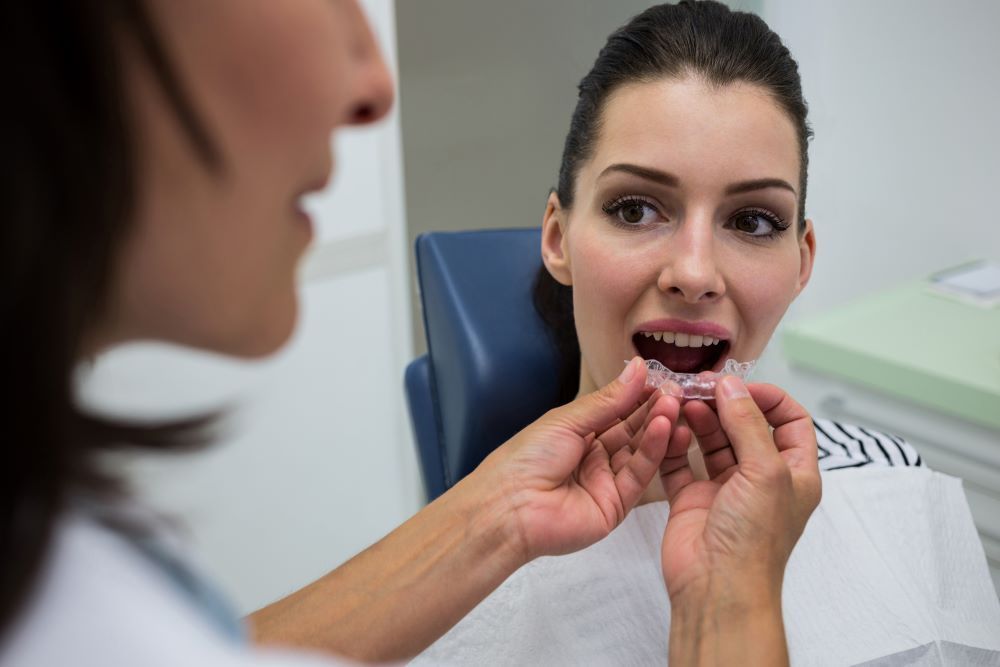
Invisalign or Braces?
Both straighten teeth. They differ in how they look, how they feel, and what they ask of you.
| Invisalign | Fixed Braces | |
|---|---|---|
| Appearance | Clear, hard to notice | Visible brackets and wires |
| Removable | Yes, for eating and brushing | No, fixed until removed |
| Eating | No food restrictions, aligners come out | Some foods must be avoided |
| Cleaning | Brush and floss as normal | Harder to clean around brackets |
| Depends on you | Yes, they only work when worn | Works whether you like it or not |
| Best for | Most everyday crowding, gaps, and bite issues | Complex cases needing bigger movements |
The honest trade-off is discipline. Braces work whether you cooperate or not. Aligners look better, but only if you actually wear them.
Is Mail-Order Aligner Treatment the Same as Invisalign?
No, and the difference is supervision. Mail-order aligner companies work from an impression kit you take yourself, with no in-person examination.
Treatment here includes regular in-person visits. A dentist checks that the teeth are moving as planned and that your gums and roots are healthy. If something is off track, they step in. Moving teeth is a clinical process, and problems that go unnoticed for months are far harder to correct later.
Worth knowing in general. In Ontario, only a dentist registered as a specialist with the Royal College of Dental Surgeons of Ontario may advertise as an orthodontist.
There is also a check most people never think about: teeth cannot be straightened safely on top of untreated decay or gum disease. A dental exam generally comes before orthodontic treatment for that reason, and a teeth cleaning is often sensible first.
According to the Canadian Dental Association, orthodontic treatment should be planned and supervised by a dental professional who has examined you in person.
How Long Does Invisalign Take?
Around 8 months is typical. Some cases finish sooner, some take longer.
Three things change the timeline:
- How complex your case is. Bigger movements take longer.
- How consistently you wear the aligners. This is the biggest factor and it is entirely in your hands.
- Whether refinements are needed. These are included, but they add time.
Your expected timeline is reviewed with you before treatment starts, so you are not guessing.
How Much Does Invisalign Cost?
A full case is $6,500. An Invisalign Express case, for smaller corrections, is $4,500. Final pricing varies based on your individual clinical needs, and your exact figure is confirmed after an examination.
- Orthodontic insurance benefits are reviewed with you
- What is covered and what is out-of-pocket is explained clearly
- Flexible payment or financing options may be available
- You get a personal estimate, not a guess over the phone
Frequently Asked Questions
Book an Invisalign Consultation in Nobleton
The only way to know whether aligners will work for your teeth, and how long it would take, is an assessment. You leave knowing the plan, the timeline, and the cost.
- Treated by an Invisalign-certified dentist, with progress checked in person
- $6,500 for a full case, $4,500 for Express, with insurance benefits reviewed
If your teeth have shifted since old braces, that is one of the more straightforward cases. Patients from Nobleton, King City, Bolton, and Schomberg are welcome.
Nobleton Dental Smiles is a dentist in Nobleton, ON, at 12931 Ontario Hwy 27 #3, Nobleton, ON L0G 1N0.