
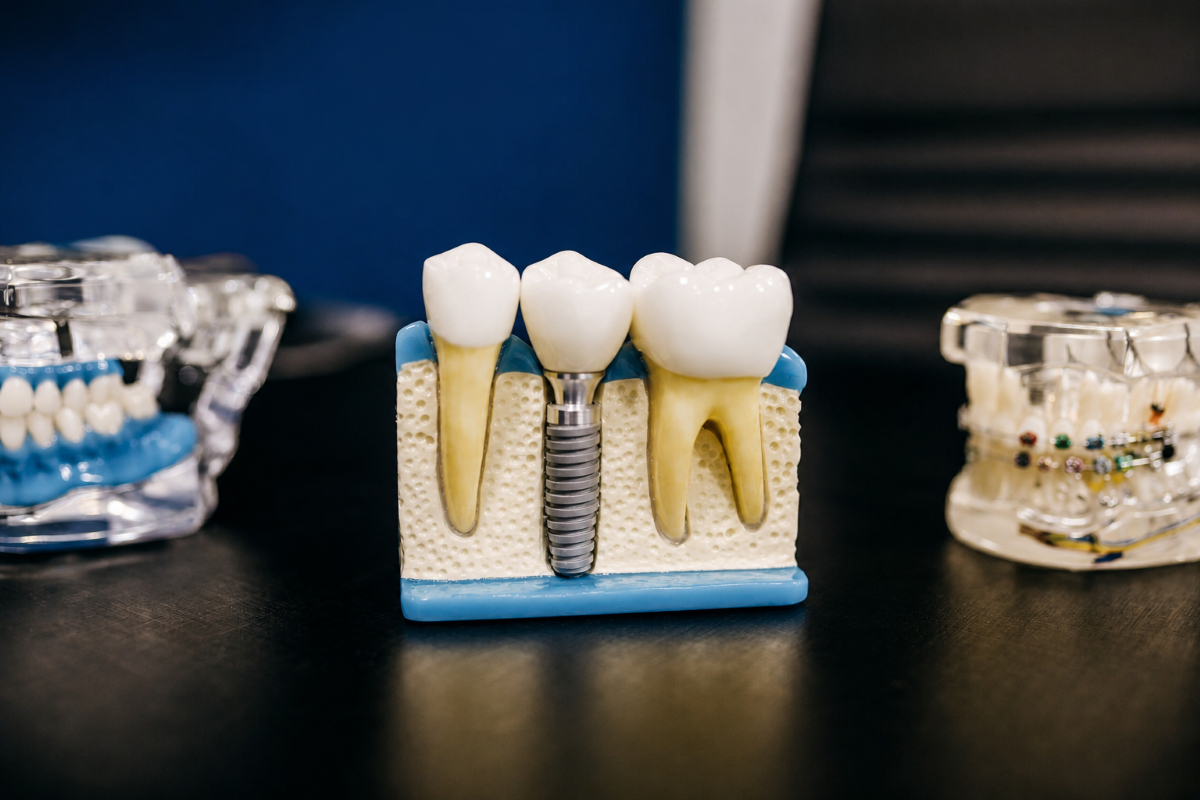
What Dental Implant Treatment Involves
- A permanent tooth replacement using a titanium post, not something removable
- Suitability assessed through clinical examination and imaging before anything is planned
- Placement under local numbing, with sedation options where appropriate
- Treatment completed in stages, allowing healing between them
- Options for one tooth, several teeth, or a full arch
- Costs explained before treatment begins, with insurance reviewed where it applies
How Do Dental Implants Work?
A dental implant replaces the root, not just the visible tooth. Over the months after placement, bone grows onto the post and locks it in place. That bond is what lets it handle normal chewing.
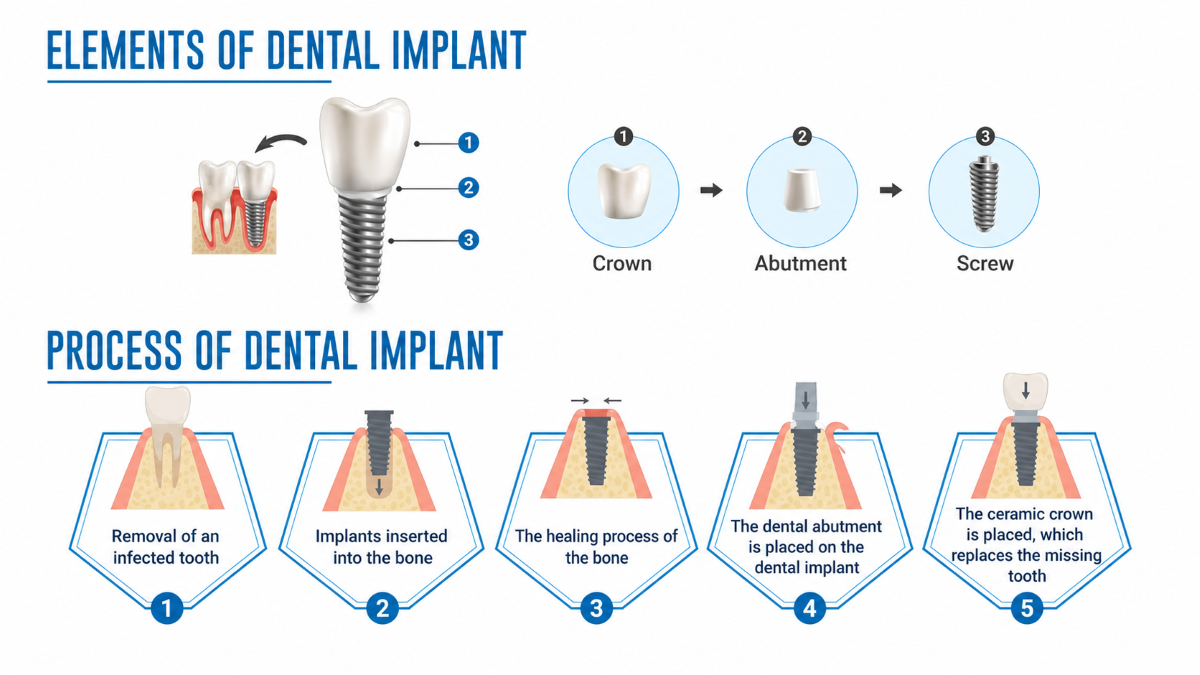
A crown, bridge, or denture then attaches to the post. This is why they feel different from removable options. Force travels through the bone as it would through a natural root, instead of resting on the gum.
Patients searching for dental implants near you should expect an assessment first. Whether an implant is possible comes down to your bone, not your preference.
Who Is a Candidate for Dental Implants?
An implant needs enough jawbone to hold it, confirmed through examination and imaging. Several other factors affect whether an implant will hold:
- Enough healthy bone, or a plan to build it up first
- Healthy gums, since implants suffer the same tissue problems as teeth
- Good oral hygiene, the single biggest factor in long-term success
- Smoking, which raises the risk of failure and slows healing
- Well-managed general health, particularly conditions affecting healing such as diabetes
- A completed jaw, which is why implants are not placed in growing adolescents
Where there is not enough bone, it can often be built up. Bone grafting and a sinus lift, both maxillofacial surgery, create the volume an implant needs. They add healing time rather than ruling treatment out.
Dental Implants, Bridges, or Dentures: Which Should You Choose?
Implants, bridges, and dentures all replace missing teeth, and none is always best. The honest comparison:
| Dental Implant | Dental Bridge | Denture | |
|---|---|---|---|
| Fixed or removable | Fixed, permanent | Fixed | Removable |
| Teeth either side | Untouched | Shaped and crowned | Untouched |
| Bone | Stimulates and preserves bone | No bone preservation under the gap | Bone changes over time, affecting fit |
| Treatment time | Months, while bone fuses | Weeks | Weeks |
| Surgery needed | Yes | No | No |
| Upfront cost | Highest | Middle | Lowest |
| CDCP coverage | Not covered | Covered if approved first | Covered, subject to approval |
| Suits | Enough bone, wanting something fixed | Healthy teeth either side of the gap | Multiple or all teeth missing, or tight budget |
The bone row is the one most patients have not considered. An implant is the only option that loads the jaw where the tooth used to be.
What Does the Dental Implant Procedure Involve?
The implant procedure is explained step by step, and completed in stages rather than one appointment.
- Assessment and planning, using examination and imaging to confirm bone and position
- Placement, performed under local numbing, with dental sedation available where appropriate
- Healing, while bone fuses to the post
- The final restoration, when the crown, bridge, or denture is fitted
- Follow-up visits, scheduled to monitor healing
Placement should not hurt, because the area is fully numbed. Afterwards most patients have mild to moderate discomfort, managed with medication and the aftercare guidance you are given.
How Long Do Dental Implants Last?
The implant and the crown on top have different lifespans, and are often quoted as one figure.
- The implant post is titanium. It does not decay, and with healthy bone and good hygiene it can last decades, potentially outlasting the patient.
- The restoration on top is a wearing part, checked at routine visits and replaced when needed.
- Longevity depends on you as much as the implant: hygiene, bone health, and bite forces decide the outcome.
Implants can also fail. Gum infection around an implant causes bone loss and is the main cause of late failure, which is why routine visits and proper cleaning matter. Anyone promising a guaranteed lifetime is overstating what is knowable.
How Much Do Dental Implants Cost?
Dental implants usually cost $5,000 to $6,500 per implant. Final pricing varies based on your individual clinical needs.
What moves the figure:
- How many implants, since pricing is per implant
- Complexity, including position and the condition of the bone
- Preparatory work such as grafting or a sinus lift, where the bone needs it
- The restoration, since a single crown and a full arch are different work
On coverage, the honest answer: the Canadian Dental Care Plan does not cover implants, including the post, the surgery, and the crown. It does cover removable dentures, subject to approval.
Private dental insurance sometimes contributes, and coverage is reviewed with you where it applies.
Frequently Asked Questions
Book a Dental Implant Consultation in Nobleton
Dental implants are a big decision, and the assessment makes it an informed one. Imaging shows whether your bone will support one, and you leave knowing the options and the cost.
- Assessment first, covering bone, gums, and medical history, with implants, bridges, and dentures compared openly
- Costs explained before treatment begins
According to the Canadian Dental Association, replacement options should be chosen on clinical suitability rather than cost alone. Patients from Nobleton, King City, Bolton, and Schomberg are welcome.
Nobleton Dental Smiles is a dentist in Nobleton, ON, at 12931 Ontario Hwy 27 #3, Nobleton, ON L0G 1N0.