
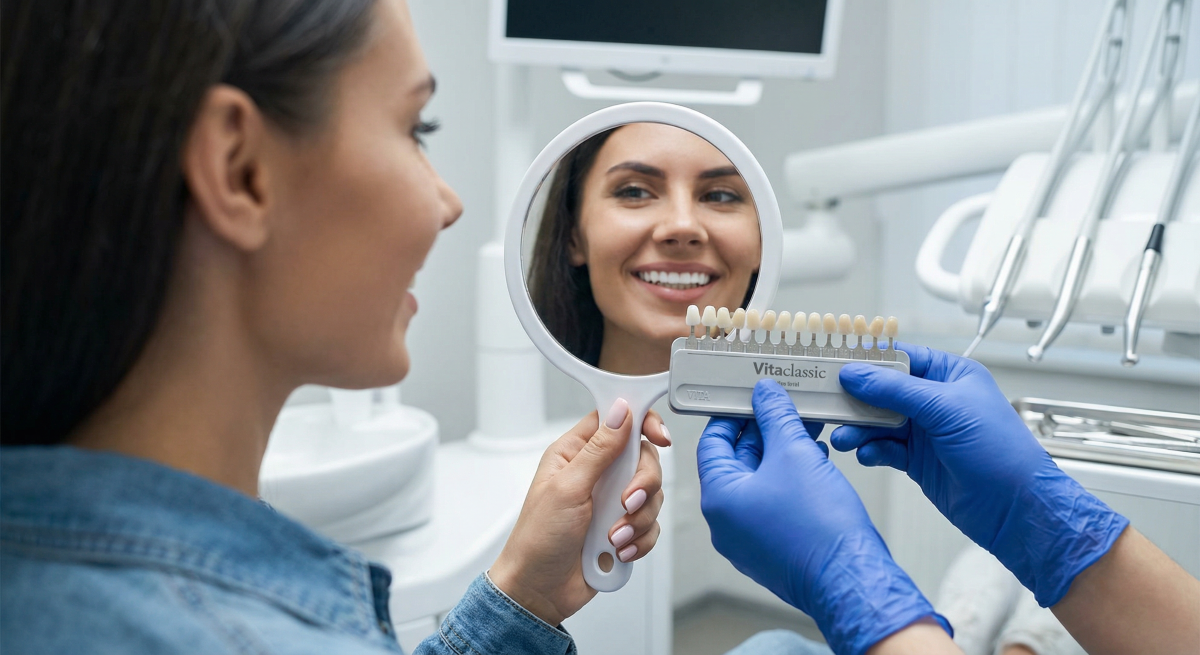
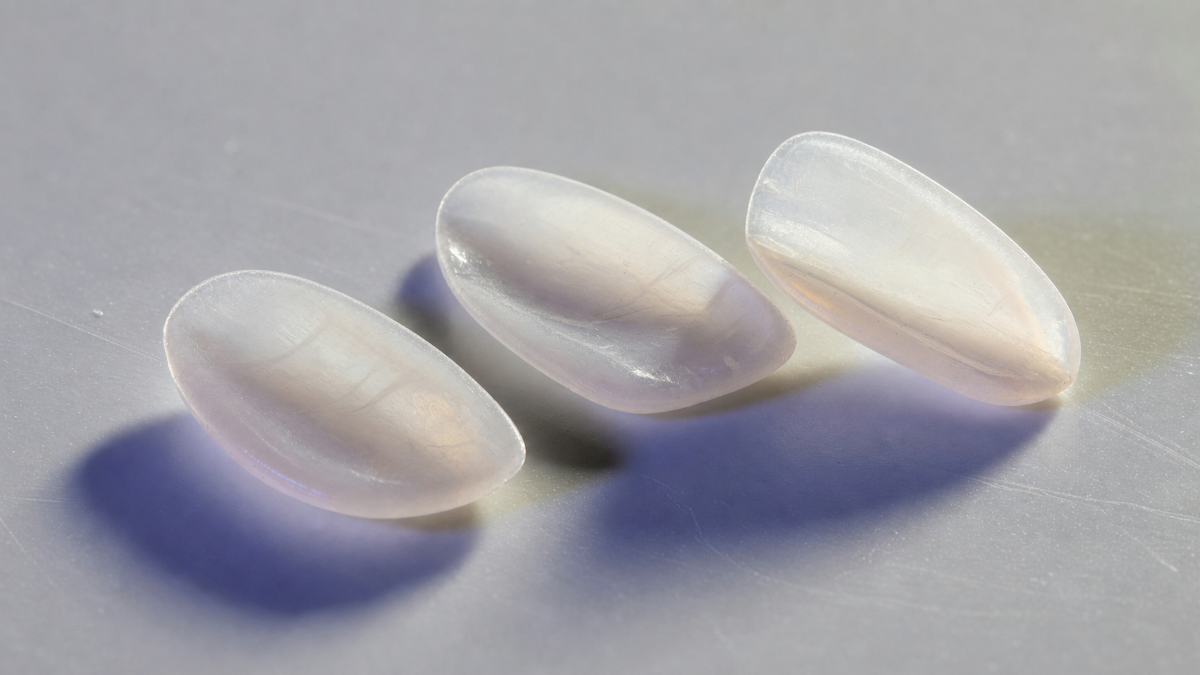
Dental veneers are thin shells bonded to the front of the teeth. They cover stains, chips, worn edges, and small gaps, changing how a tooth looks without changing the tooth behind it. Veneers are made from composite, porcelain, or zirconia, and each material costs and lasts differently.
What Dental Veneers Can Fix
- Stained or badly discoloured teeth that whitening will not shift
- Chipped, cracked, or worn teeth
- Gaps between teeth, or teeth of uneven shape
- A full smile makeover, where several teeth are treated together
- One tooth or many, since veneers are priced per tooth
- Whether they suit you is checked case by case
What Are Dental Veneers?
A veneer is a thin shell that sits on the front of a tooth. It is bonded in place, so it stays put and does not come out like a denture.
Dental veneers change how a tooth looks. They do not make a weak tooth stronger, and they do not fix decay. If a tooth is damaged rather than just discoloured, a crown or a filling is the better answer, and that is explained at your visit.
People searching for dental veneers near you are usually trying to fix one of four things: colour, chips, shape, or gaps. Veneers handle all four.
Which Dental Veneers Are Best: Composite, Porcelain, or Zirconia?
Dental veneers come in three materials here. The material changes the price, the look, and how long it lasts.
| Composite | Porcelain | Zirconia | |
|---|---|---|---|
| Cost per tooth | $500 to $1,000 | $2,000 to $2,500 | $2,000 to $2,500 |
| What it is | Tooth-coloured filling material shaped onto the tooth | A thin ceramic shell | A stronger ceramic shell |
| Staining | Can stain over time | Resists staining well | Resists staining well |
| Strength | Least strong of the three | Strong | Strongest of the three |
| Best for | Smaller changes, or a lower budget | Front teeth, where looks matter most | Patients who grind, or teeth taking more force |
Final pricing varies based on your individual clinical needs. Cost is worked out per tooth, so a single veneer and a full smile are very different numbers. You are given a plan with the total before anything starts.
What Happens to Teeth Under Veneers?
What happens underneath is worth asking before you commit, and the honest answer is that it depends on the veneer.
Most veneers need a thin layer of enamel removed so the shell sits flush and does not look bulky. Enamel does not grow back.
Once a tooth has been prepared, it will always need a veneer or a crown on it. That is not a reason to avoid dental veneers, but it is a reason to be sure first.
Composite veneers usually need less of the tooth removed than porcelain veneers, which is one reason they are sometimes chosen for smaller changes. Whichever you pick, what will be removed is explained before treatment, so you can decide with the full picture.
How Are Dental Veneers Fitted?
- Assessment and planning. Your teeth are checked and the plan is agreed, including how many teeth and which material.
- Preparation and impressions. The teeth are prepared and impressions are taken so the veneers fit properly.
- Fitting. The finished veneers are bonded securely in place.
- Aftercare. You are shown how to look after them.
Veneers here are made using impressions rather than digital scanning. It is a well-proven way of getting an accurate fit.
How Long Do Veneers Last, and How Do You Look After Them?
How long dental veneers last depends on the material and on your habits. Porcelain veneers and zirconia hold up longer than composite. Grinding your teeth, biting your nails, or chewing ice will shorten the life of any veneer.
- Brush and floss as normal. Veneers do not get cavities, but the tooth underneath still can.
- Keep up your regular checkups, so wear is spotted early.
- Protect them if you grind. A night guard is worth discussing if you clench at night.
- Go easy on staining drinks if you have composite veneers, since those can discolour over time.
Wear, staining, and when a veneer might need replacing are all discussed with you, so the expectations you leave with are realistic ones.
How Much Do Dental Veneers Cost?
Composite veneers cost $500 to $1,000 per tooth. Porcelain and zirconia veneers cost $2,000 to $2,500 per tooth. Final pricing varies based on your individual clinical needs.
What changes the total:
- Which material you choose
- How many teeth are being treated
- How complex the case is
On insurance: veneers are cosmetic, so they are usually not covered. That includes the Canadian Dental Care Plan, which does not pay for cosmetic treatment. Where financing options are available, they are discussed with you.
Frequently Asked Questions
Book a Dental Veneer Consultation in Nobleton
Dental veneers are worth thinking about properly, because the enamel part cannot be undone. A consultation tells you which material suits your teeth, how many you would need, and exactly what it costs.
- All three materials offered, with the price per tooth explained up front
- Realistic expectations set before treatment, including what is removed and what it will look like
If a tooth is damaged rather than just discoloured, a dental exam is the place to start. Patients from Nobleton, King City, Bolton, and Schomberg are welcome.
Nobleton Dental Smiles is a dentist in Nobleton, ON, at 12931 Ontario Hwy 27 #3, Nobleton, ON L0G 1N0.