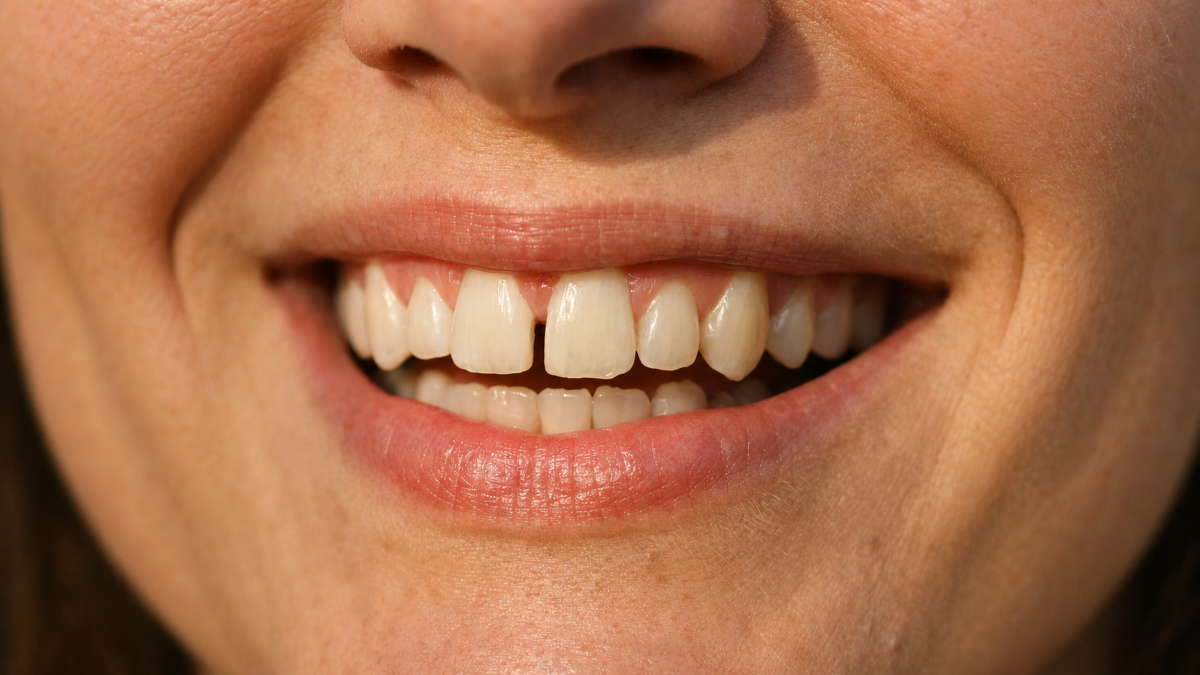
Dental bonding uses a tooth-coloured resin to repair a chip, close a small gap, or reshape a tooth. The resin is applied straight onto the tooth, shaped by hand, and set with a light. Most cases are finished in one visit, usually with no needle at all.
What Is the Purpose of Dental Bonding?
Bonding is the quickest way to sort out the small things that bother people about their smile:
- Chipped or cracked teeth
- Small gaps between the front teeth
- Stubborn staining that whitening will not shift
- Uneven or short teeth that need reshaping
- Exposed roots where the gum has receded
The last one matters more than it sounds. When gums recede, the root surface is left uncovered, and that is often what causes cold sensitivity. Bonding covers it.
Is Dental Bonding Better Than Veneers?
This is the cosmetic dentistry decision most people are actually trying to make. Both use a covering on the front of the tooth, but they are not the same commitment.
| Bonding | Porcelain Veneers | |
|---|---|---|
| Visits | Usually one | Two or more |
| Enamel removed | Very little | More, and it does not grow back |
| Reversible | Largely yes | No |
| Staining | Resin picks up stain over time | Far more stain-resistant |
| Durability | Good, and easy to touch up | Longer-lasting |
| Cost | More affordable for minor repairs | Higher investment |
| Best for | One or two small fixes | A full change across several teeth |
People searching for dental bonding near you are usually weighing exactly this. The honest summary: bonding is faster, cheaper, and keeps more of your own tooth. Veneers look better for longer and resist staining. Which one is right depends on your budget, how many teeth are involved, and how much you want to change.
Is Dental Bonding the Same as a Filling?
Not quite, although the confusion is understandable, because they use the same composite resin.
A composite filling repairs decay or damage inside the tooth. Its job is to restore the tooth and stop the problem spreading.
Bonding is cosmetic. It reshapes the outside of a healthy tooth to improve how it looks. Same material, different purpose.
Where a tooth needs both, decay is treated first. Cosmetic work placed over untreated decay does not last.
How Is Dental Bonding Done?
- The shade is matched to the teeth around it.
- The surface is gently etched so the resin grips properly.
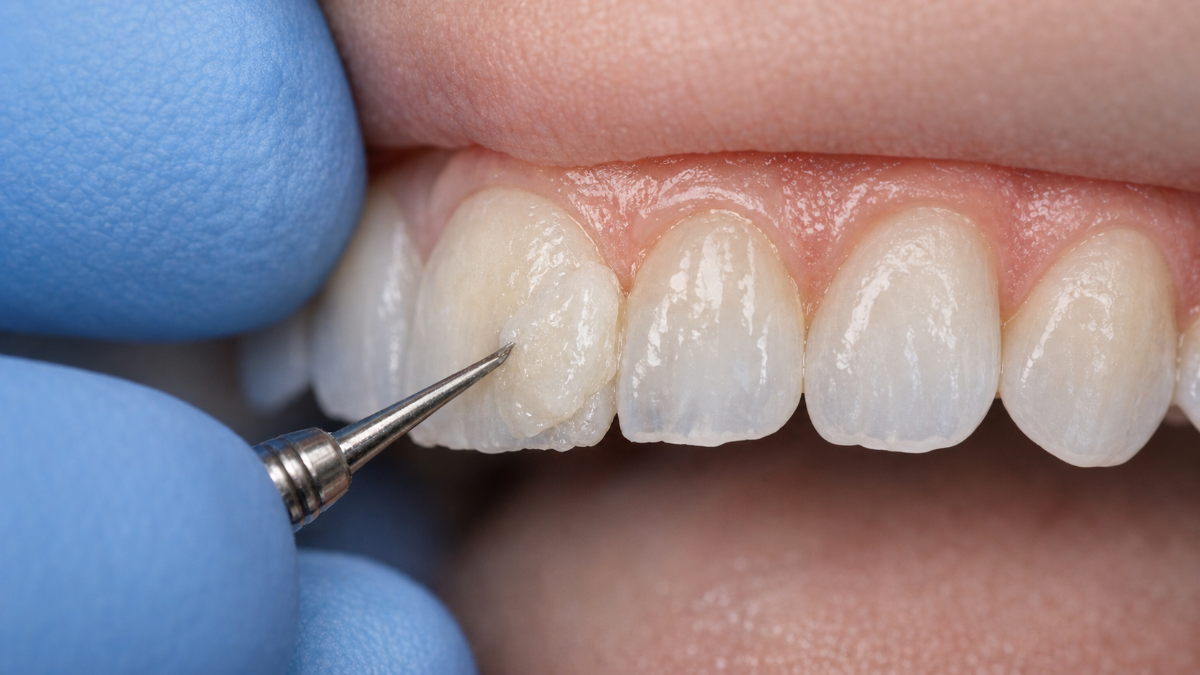
- The resin is applied and sculpted by hand into shape.
- A curing light sets it instantly, so it is hard before you leave the chair.
- It is polished to blend in with the teeth either side.
No drilling and usually no needle. That is the part most people are surprised by. Because so little tooth is touched, bonding rarely needs freezing, and you can eat and drink normally as soon as you walk out.
How Long Does Dental Bonding Last?
There is no fixed number, and it depends far more on you than on the material. What shortens its life:
- Nail-biting and chewing ice, which are the two biggest culprits
- Using your teeth to open things
- Grinding or clenching
- Coffee, tea, red wine, and smoking, which stain the resin
The good news is that bonding is easy to repair. If a piece chips, it is usually touched up rather than replaced, which is not true of a porcelain veneer.
Does Dental Bonding Stain?
Yes, and anyone who tells you otherwise is selling something. Composite resin picks up stain from coffee, tea, and tobacco over the years, and it stains more readily than natural enamel does.
There is one thing worth knowing before you book. Bonding does not respond to whitening. Bleaching gel lightens natural enamel, not resin. If you whiten afterwards, the bonded areas stay the same shade and start to stand out.
If you are considering both, whiten first, then have the bonding matched to your new shade. Getting that order wrong is the most common regret with this treatment.
How Much Does Dental Bonding Cost?
Dental bonding costs $300 to $500 per tooth. Final pricing varies based on your individual clinical needs.
The price moves with the size and complexity of the repair. A small chip on one tooth is a different job from reshaping four.
On coverage, the rule is straightforward:
- Purely cosmetic bonding is usually not covered by insurance or by the Canadian Dental Care Plan
- It may be covered where it is needed for the health of the tooth, such as repairing a break or covering an exposed root
Your plan is checked before treatment so you know what you are paying.
Frequently Asked Questions
Book a Dental Bonding Consultation in Nobleton
Is a chipped edge or a small gap the one thing you notice in photographs? Dental bonding is usually the fastest and gentlest way to fix it.
- $300 to $500 per tooth, with coverage checked before you commit
- One visit, no drilling, and usually no needle
A consultation will tell you whether bonding is enough on its own, or whether veneers or a smile makeover would serve you better. Patients from Nobleton, King City, Bolton, and Schomberg are welcome.
Nobleton Dental Smiles is a dentist in Nobleton, ON, at 12931 Ontario Hwy 27 #3, Nobleton, ON L0G 1N0.