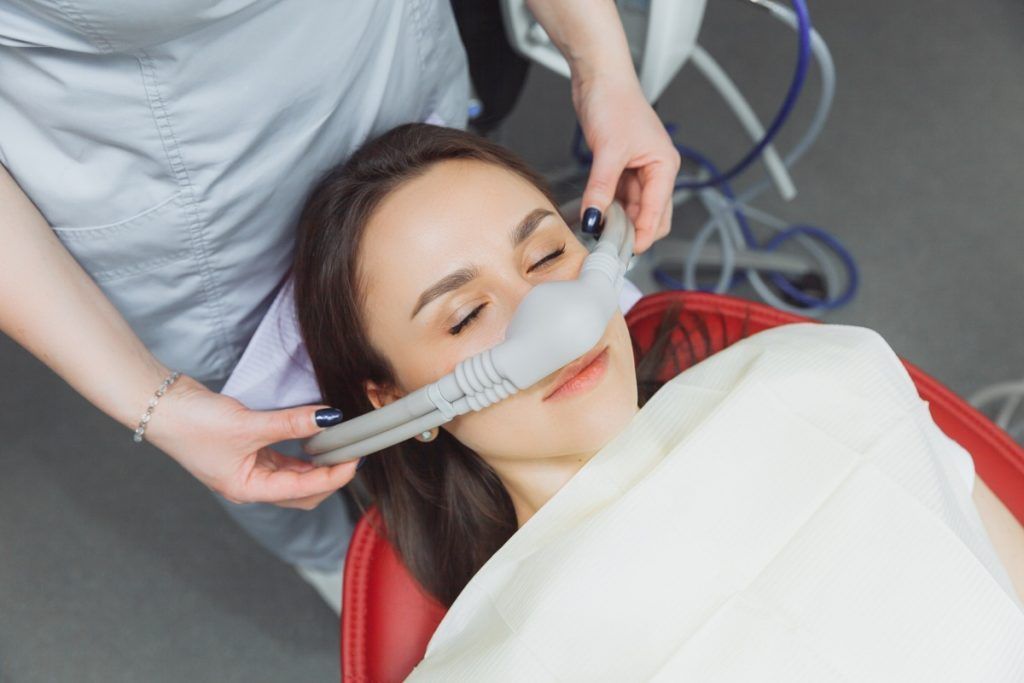
Dental sedation uses medication to help a patient feel relaxed during treatment while remaining awake and able to respond. It is commonly used for anxiety, longer or more complex procedures, and a sensitive gag reflex. Conscious sedation is not the same as general anaesthetic, and patients stay responsive throughout.
What Dental Sedation Involves
- You stay awake and responsive throughout the appointment
- Two options are available: nitrous oxide, often called laughing gas, and oral sedation
- Your medical history is reviewed first, every time
- Sedation is matched to your age and health
- You are monitored continuously during treatment
- Effects wear off shortly after treatment, with recovery expectations explained in advance
Who Is Dental Sedation For?
Dental sedation is offered as an option to all patients rather than reserved for extreme cases. Some people want it for a single difficult appointment; others need it to attend at all.
It is commonly helpful for:
- Dental anxiety or fear, including patients who have avoided treatment for years
- Longer or more complex procedures, where staying comfortable in the chair is the challenge
- A sensitive gag reflex, which can make otherwise routine work difficult
- Patients who simply prefer it, since it is available as a choice
There is no threshold of anxiety you need to reach before asking. If the prospect of an appointment is what is stopping you, that is reason enough to raise it.
What Dental Sedation Options Are Available?
Two forms of conscious sedation dentistry are offered, and they suit different situations:
| Nitrous Oxide (Laughing Gas) | Oral Sedation | |
|---|---|---|
| How it is given | Inhaled through a small mask over the nose | A medication taken by mouth before the appointment |
| Are you awake? | Yes, awake and responsive | Yes, awake and responsive, though more deeply relaxed |
| Onset | Takes effect quickly once breathing it in | Needs time before the appointment to take effect |
| Wearing off | Effects clear shortly after the mask is removed | Takes longer to clear, and lingers after the visit |
| Getting home | Driving eligibility is confirmed with you | You will usually need someone to drive you |
| Often suited to | Mild to moderate anxiety, gag reflex, shorter visits | Higher anxiety, or longer appointments |
Which option suits you is decided together, after your medical history is reviewed. The benefits and limitations of each are discussed openly rather than one being presented as the obvious answer.
Are You Asleep With Dental Sedation?
No. That is the most common misconception about dental sedation: with both options offered here, you remain awake and responsive. You can answer questions, indicate discomfort, and follow instructions throughout.
What changes is how the appointment feels. Anxiety recedes, time passes more easily, and the experience is far less memorable, which is exactly what most anxious patients actually want. Being unconscious is not required to be comfortable.
Is Dental Sedation Safe for Children and Adults?
Yes, when it is properly assessed and monitored, and both are standard practice here.
- Medical history is reviewed before sedation, including medications and existing conditions
- Sedation is matched to age and health, so a child and an adult are not treated the same
- Monitoring is continuous during treatment
- Post-treatment instructions are provided before you leave
- Safety steps are followed at all times
For children, nitrous oxide is discussed where it suits the child and the situation, alongside the non-medical approaches that often work on their own. Extra time and a children’s dentistry visit at the child’s own speed frequently achieve more than medication.
Dental sedation is also regulated. The Royal College of Dental Surgeons of Ontario sets the standards a practice must meet for each level of sedation. Those cover training, equipment, and monitoring. You are entitled to ask any practice what it is authorized to provide. The Canadian Dental Association publishes patient guidance on dental anxiety.
What Should You Expect Before and After Dental Sedation?
The practical details get explained in advance, because most of the uncertainty patients feel is logistical rather than clinical.
Before: eating instructions are provided ahead of your appointment, and your medical history and current medications are reviewed. Tell the dentist about everything you take, including supplements.
During: you stay awake and responsive, and you are monitored throughout.
After: effects wear off shortly after treatment. Driving eligibility is explained to you, and recovery expectations are discussed clearly so you know what the rest of your day looks like.
How Much Does Dental Sedation Cost?
Sedation costs are explained to you before treatment begins, and insurance coverage is reviewed where it applies.
- Insurance coverage is reviewed where it applies
- Benefits and limitations are discussed transparently, including whether sedation is genuinely necessary for your treatment
- Costs are confirmed in advance, so nothing about the fee is a surprise on the day
Patients looking for dental sedation near you in Nobleton should ask what a quote covers.
Frequently Asked Questions
Book Dental Sedation in Nobleton
If anxiety has kept you out of a dental chair, sedation is the thing that most often breaks the cycle.
- Two conscious sedation options, nitrous oxide and oral sedation, chosen after your medical history is reviewed
- You stay awake and monitored throughout, with costs and recovery explained before treatment begins
Tell the team when you book that anxiety is a factor. Patients from Nobleton, King City, Bolton, and Schomberg are welcome.
Nobleton Dental Smiles is a dentist in Nobleton, ON, at 12931 Ontario Hwy 27 #3, Nobleton, ON L0G 1N0.